Occupied building renovation remains one of the biggest challenges for Europe’s existing building stock. The DIGIFAB Spanish pilot at the University of Burgos is demonstrating how digital technologies, prefabricated façades and real-time monitoring can minimise disruption while improving building performance.
The pilot will demonstrate how a renovation process can become faster, more precise and less invasive, even in a building that remains fully operational throughout the works.
A real building, a real renovation challenge
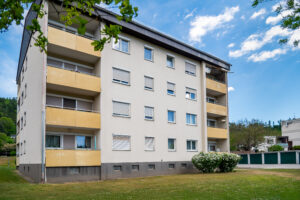
The Spanish pilot is taking place in a University of Burgos building that remains fully operational for teaching, research and administrative activities. Renovating an occupied building means minimising noise, dust and disruption for students and staff.
DIGIFAB is testing a different approach, with renovation works carried out mainly from the outside to improve the thermal performance of the façade while allowing day-to-day activities inside the building to continue.
As the intervention targets only part of the façade, the building’s overall energy rating is expected to remain at class B. However, the renovated area is expected to achieve better thermal performance and improved comfort conditions.
Digital data as the starting point
Before installing any prefabricated elements, DIGIFAB starts with a clear understanding of the existing building.
A 3D laser scanning campaign has already been carried out on the intervention area, generating a point cloud of the façade to support the development of the BIM model. Thermal drone inspections will provide additional data on the building envelope, helping to identify potential thermal bridges, heat loss and other anomalies.
The BIM model will progressively integrate real data collected through sensors and monitoring systems, contributing to the development of the building’s Digital Twin. By combining digital models, thermal analysis and measured data, the project team can make more informed design and planning decisions and approach the renovation with greater accuracy.
Prefabricated panels for a faster, cleaner installation
At the heart of the intervention is the installation of prefabricated façade panels.
The panels aim to improve the thermal transmittance (U-value) of the renovated façade area while demonstrating how this type of solution can be applied to an existing building that remains in use. This approach can enable a faster, cleaner and more controlled installation process, reducing the impact of renovation works on occupants.
The Burgos pilot will provide a real-world environment to validate the potential of prefabrication for low-disruption building renovation.
People are part of the renovation process
Minimising disruption is not only about construction methods, it is also about understanding the experience of the people who use the building every day.
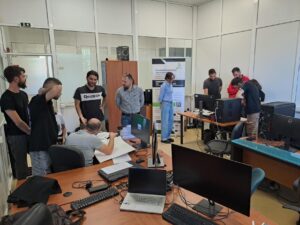
In May 2026, project partner ASM Research Solutions Strategy carried out a stakeholder engagement campaign at the University of Burgos, introducing DIGIFAB to the university community and gathering feedback before the renovation begins.
The activities involved students, researchers, academic staff, building managers, designers, manufacturers, technology providers and public authorities, ensuring that different perspectives are considered from the very beginning. Stakeholder engagement will continue throughout the renovation process, providing valuable insights into both the technical and human dimensions of the intervention.
By combining technical performance with user experience, DIGIFAB aims to demonstrate that successful renovation is measured not only through building data, but also through its impact on the people who learn, work and interact within the building.
Measuring the impact of renovation
How can we know whether a renovation has actually improved building performance? By measuring it.
The Spanish pilot will collect real data before and after the intervention using a range of monitoring systems. An outdoor weather station will track external conditions, while an indoor comfort station will monitor the internal environment. A dedicated energy meter will also measure the energy consumption of the laboratory fan coil units.
These data will help the DIGIFAB team assess changes in energy use, indoor comfort and the thermal performance of the renovated area. The information collected will also contribute to the development of the Digital Twin, connecting the digital building model with real operational data.
From Burgos to Europe’s building stock
The University of Burgos pilot goes beyond the renovation of a single section of a university façade. It is a real-world test of a renovation approach that could be replicated in other occupied buildings across Europe.
By integrating digital technologies, prefabrication and monitoring throughout the renovation process, DIGIFAB aims to demonstrate how building renovation can become more precise, efficient and occupant-friendly.
The pilot will provide valuable data and insights into the application of prefabricated solutions in existing buildings, helping turn innovative renovation approaches into practical, scalable solutions for Europe’s building stock.
From Burgos, DIGIFAB is testing what the next generation of building renovation could look like: more digital, more precise and designed around the buildings, and people,already in place.